

Natural wine: beyond the hype
Natural wine is everywhere, from high-end lists to local shops. Despite the noise, there is still no consensus on what the term actually means. If you feel confused, it's because the rules are being written as we go.
Natural wine isn't a legal term. Most people agree it starts with organic or biodynamic grapes and relies on native yeasts rather than lab-grown packets. Beyond that, the methods vary wildly from one cellar to the next.
This guide aims to cut through the noise and provide a clear, honest comparison between natural and conventional winemaking. We’ll explore the philosophies, the practices, and the potential pitfalls of each approach. Forget the dogma; we’re here to understand what’s in the bottle and help you make informed choices.
The lack of a legal definition
Here’s the frustrating truth: in the United States, and in most parts of the world, there’s no legal definition of "natural wine’. The Alcohol and Tobacco Tax and Trade Bureau (TTB) regulates wine labeling, but it doesn’t have a category for ‘natural’. According to the ttb.gov website, regulations focus on permitted additives and prohibited practices, but don"t actively define natural wine. This leaves the door open to interpretation and, sometimes, marketing hype.
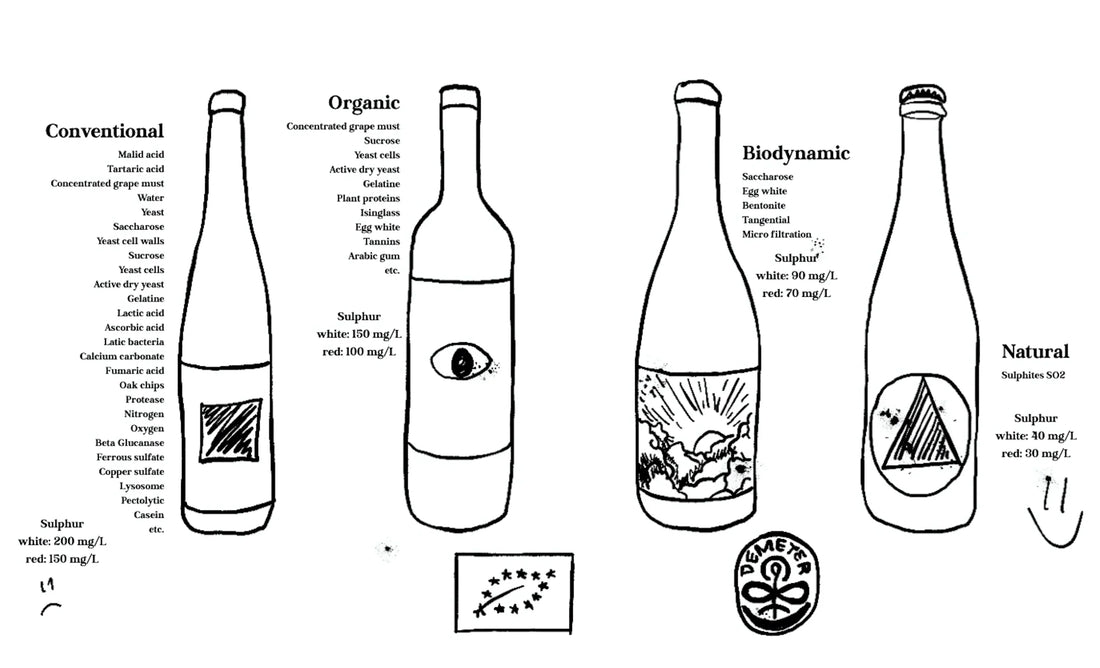
Several certifications attempt to provide some clarity. Demeter certification, for example, signifies biodynamic farming practices, which emphasize holistic vineyard management and ecological balance. Biodyvin is another biodynamic organization with strict standards. However, even these certifications don’t guarantee a "natural" wine, as they primarily address farming practices, not winemaking processes.
The lack of regulation means "natural’ often functions as a marketing term, appealing to consumers seeking authenticity and sustainability. It’s a signal, but not necessarily a guarantee. This ambiguity can be incredibly frustrating for wine enthusiasts who want transparency and clear standards. It’s important to look beyond the label and research the producer"s practices.
- Demeter: A certification for biodynamic farming that looks at the whole farm as an ecosystem.
- Biodyvin: Another biodynamic organization with strict standards.
- Organic certification: Guarantees organically grown grapes, but doesn't address winemaking practices.
How conventional wine is made
Conventional winemaking isn’t inherently "bad’—it’s simply the most widely practiced approach. It prioritizes consistency, stability, and scalability. It begins with vineyard management, which may involve the use of synthetic pesticides and herbicides to control pests and diseases. This isn"t always the case, and many conventional wineries are adopting more sustainable practices, but it's a common element.
During fermentation, winemakers often select specific yeast strains to ensure a predictable and controlled process. This helps achieve desired flavor profiles and alcohol levels. Fining and filtering are then used to clarify the wine, removing sediment and unwanted particles. These processes contribute to a polished, stable product.
Finally, sulfur dioxide (SO2) is commonly added as a preservative to prevent oxidation and microbial spoilage. SO2 has been used in winemaking for centuries, and it’s considered safe in moderate amounts. Conventional winemaking aims for a consistent, reliable product that meets consumer expectations. It’s a process refined over decades, designed for efficiency and predictability.
The intervention spectrum
Instead of thinking of winemaking as a strict binary—natural versus conventional—it’s more helpful to envision a spectrum of intervention. At one end, you have highly natural wines made with minimal additions and manipulations. These wines often embrace native yeasts, forgo fining and filtering, and use very little or no sulfur dioxide. At the other end, you have wines with extensive additions, adjustments, and manipulations.
Most wines fall somewhere in between these extremes. Many winemakers use a combination of traditional and modern techniques, making small adjustments to ensure quality and stability. The role of sulfur dioxide (SO2) is particularly contentious. While often associated with conventional winemaking, SO2 is used by some natural winemakers as well, albeit in smaller quantities.
The debate centers around the level of intervention and its impact on the wine’s character. Proponents of natural wine argue that minimal intervention allows for greater expression of terroir, while critics contend that it increases the risk of faults and instability. Ultimately, the degree of intervention is a winemaking choice, influenced by philosophy, tradition, and market demands.
- Low Intervention: Native yeasts, minimal SO2, unfined/unfiltered.
- Moderate Intervention: Selected yeasts, moderate SO2, some fining/filtering.
- High Intervention: Selected yeasts, high SO2, extensive fining/filtering, flavor adjustments.
Wine Intervention Level: A Comparison
| Winemaking Step | Minimal Intervention | Moderate Intervention | High Intervention |
|---|---|---|---|
| Yeast | Utilizes native or ‘wild’ yeasts present on the grapes and in the winery environment. Fermentation occurs spontaneously. | May utilize commercially produced yeasts, but with a focus on strains that are relatively neutral and do not significantly alter the wine’s flavor profile. | Commonly uses selected commercial yeasts to ensure predictable and consistent fermentation, potentially influencing aroma and flavor. |
| Fining & Filtration | Typically avoids fining or filtration, resulting in wines that may appear cloudy or contain sediment. | May employ fining agents like bentonite (for protein stabilization) or isinglass (for clarification) and/or light filtration to clarify the wine. | Frequently utilizes fining agents (egg whites, casein, etc.) and filtration to achieve clarity and stability. Can significantly alter wine texture and flavor. |
| Sulfur Dioxide (SO2) Addition | SO2 addition is minimal or absent, often relying on the wine’s inherent protective qualities. Levels are typically below 35 ppm. | SO2 is used in limited amounts, generally below 100 ppm, to protect against oxidation and microbial spoilage. | SO2 is commonly used at higher levels, potentially exceeding 100 ppm, to ensure microbial stability and prevent oxidation throughout the winemaking process and bottling. |
| Oak Influence | Oak use is rare, and when employed, typically involves older, neutral oak vessels to avoid imparting strong oak flavors. | May utilize oak barrels, often older ones, for a moderate period, contributing subtle oak characteristics. | Frequently uses new oak barrels for extended periods, imparting significant oak aromas, flavors, and tannins. |
| Harvesting Method | Hand-harvesting is common, prioritizing gentle handling of the grapes. | May involve a combination of hand and mechanical harvesting. | Primarily relies on mechanical harvesting for efficiency. |
| Irrigation | Dry-farmed where possible, relying on natural rainfall. Irrigation is avoided to encourage concentration of flavors. | Limited irrigation may be used to supplement rainfall during periods of drought stress. | Irrigation is commonly employed to maintain consistent vine growth and yield. |
Illustrative comparison based on the article research brief. Verify current pricing, limits, and product details in the official docs before relying on it.
Taste & Terroir: What Does It Mean?
A central tenet of the natural wine movement is the idea that minimal intervention allows for greater expression of terroir – the unique combination of soil, climate, and other environmental factors that influence a wine’s character. The argument is that by interfering less with the natural processes of fermentation and aging, winemakers can allow the grape’s inherent qualities and the vineyard’s distinct personality to shine through.
Some wine enthusiasts claim that natural wines exhibit a greater sense of vibrancy, complexity, and authenticity. They describe these wines as being more alive, with a distinct energy and a unique flavor profile that reflects their origin. Others find these differences subtle or even nonexistent.
Taste is subjective. One person's 'pure expression of soil' is another person's 'barnyard funk.' I don't think natural wine is inherently better, but it is usually more unpredictable. That unpredictability is exactly why people buy it.
Common wine faults
The lack of intervention in natural winemaking comes with a trade-off: an increased risk of "wine faults". These are undesirable aromas or flavors that can develop due to microbial activity or oxidation. Common faults include brettanomyces (a yeast that can produce barnyard-like aromas), volatile acidity (excessive vinegar-like smell), and oxidation (a stale, sherry-like flavor).
These faults aren’t necessarily harmful, but they can detract from the drinking experience. They occur more frequently in natural wines because the absence of sulfur dioxide and other preservatives leaves the wine more vulnerable to spoilage organisms. It’s a risk that natural winemakers accept in pursuit of their philosophical goals.
It’s important to be realistic: natural wine isn't always perfect. Sometimes, a natural wine will exhibit noticeable flaws. However, many wine enthusiasts appreciate the rustic charm and unpredictable nature of these wines, viewing the occasional fault as a sign of authenticity.
Natural Wine Hotspots: Where to Explore
Several regions have become known as hotspots for natural winemaking. The Loire Valley in France is a pioneering region, with numerous producers embracing organic and biodynamic practices. In Italy, Friuli is a vibrant center for natural wine, known for its skin-contact white wines and innovative producers.
California’s Central Coast and Sonoma County are also emerging as important natural wine regions, with a growing number of winemakers experimenting with minimal intervention techniques. And let’s not forget Georgia, often considered the birthplace of wine, where traditional winemaking methods using qvevri (clay amphorae) have been practiced for millennia.
Here are a few producers to get you started: Domaine de la Grange Tiphaine (Loire Valley, France), known for its Chenin Blanc; Radikon (Friuli, Italy), famous for its skin-contact white wines; and Foradori (Trentino, Italy), a biodynamic estate producing elegant reds.
- Loire Valley, France: Pioneering region for natural wine.
- Friuli, Italy: The home of skin-contact 'orange' wines and producers like Radikon.
- California, USA: Emerging region with innovative producers.
- Georgia: Birthplace of wine, with ancient winemaking traditions.
Featured Products

Enhances wine aroma and flavor instantly · Easy to use and clean · Sleek black design
This aerator offers a budget-friendly way to immediately improve the taste and smell of your wine.

Combines aeration and pouring in one step · Durable construction · Ergonomic design for comfortable handling
A versatile option that simplifies the wine tasting experience by aerating and pouring simultaneously.

Hand-blown crystal glass decanter · Integrated aerator for enhanced flavor and aroma · Elegant design, suitable for gifting
This premium decanter elevates your wine presentation and significantly improves the sensory experience with its sophisticated design.

Improves wine flavor and ensures smooth pouring · Clear and stainless steel aesthetic · User-friendly operation
A practical and stylish aerator that effectively enhances wine's profile while providing a seamless pour.

Glass carafe with a natural cork stopper · Designed for beverages, including wine · Clear glass allows for visual appreciation of the wine
This carafe provides a simple yet elegant vessel for serving wine, allowing its natural characteristics to shine.
As an Amazon Associate I earn from qualifying purchases. Prices may vary.

No comments yet. Be the first to share your thoughts!