

When Your Corkscrew Fails
You've got the wine, the glasses, and maybe some cheese and crackers, but then you realize the corkscrew is missing. It's a frustrating scenario. Don't let a missing tool ruin your evening. Here are seven methods to open a wine bottle without a corkscrew.
These methods aren't perfect. Some carry a higher risk of breaking the bottle, and none are as clean as using a proper corkscrew. Proceed with caution, as glass and force don't mix well. Older wines often have drier corks, which can affect the success of some methods.
We'll start with options that require minimal tools and move towards those for emergencies only. Knowing these tricks is useful, but a proper corkscrew is always the best choice.
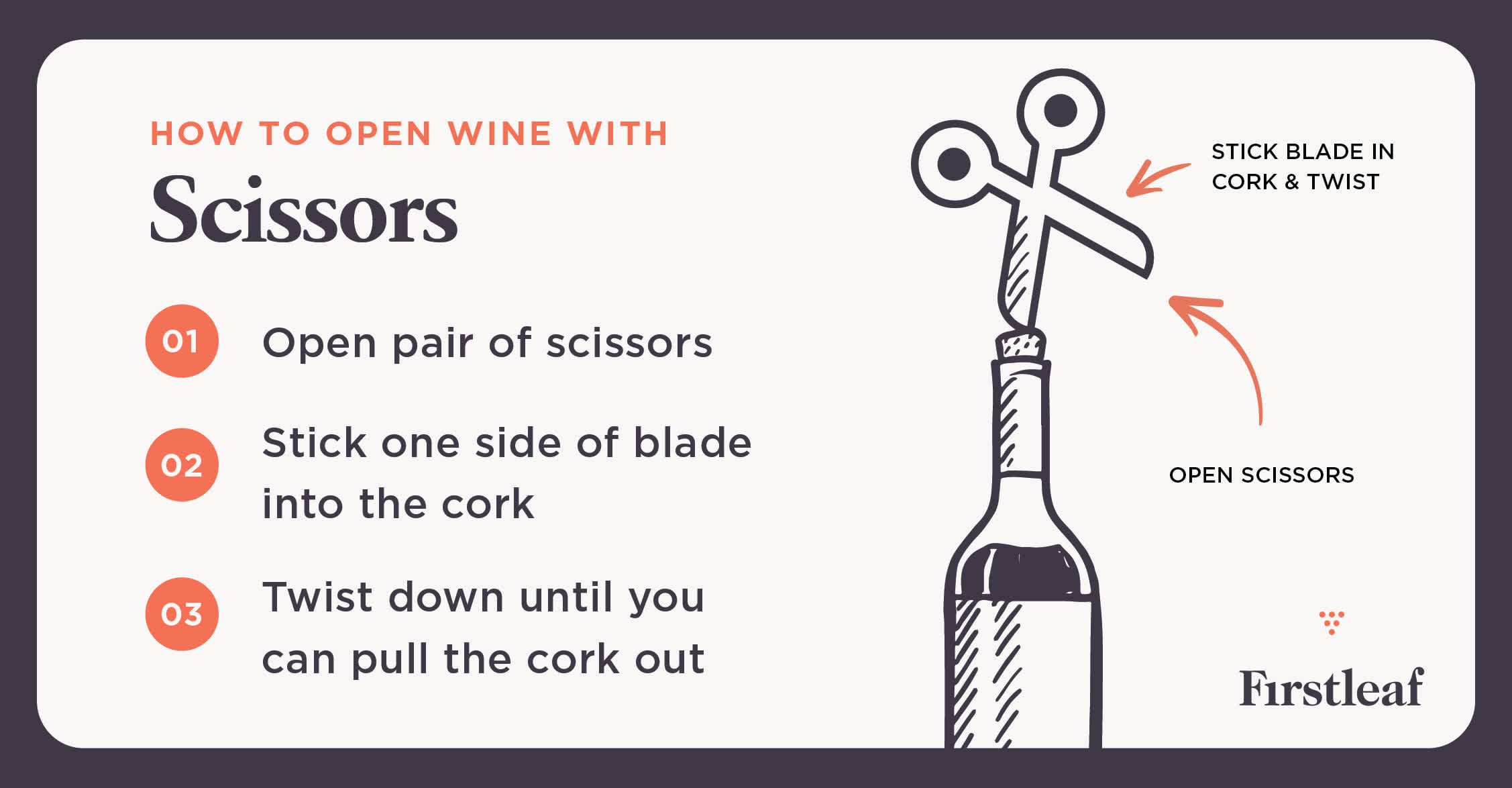
The Shoe Method: A Surprisingly Effective Trick
It sounds strange, but the shoe method is surprisingly effective, particularly for older wines. To perform this technique, place the base of the wine bottle inside a shoe – ideally one with a flat sole, like a sneaker or loafer. Wrap the shoe around the bottle, providing a cushioned surface.
Next, carefully and gently bang the bottom of the shoe against a sturdy wall. The impact creates pressure that gradually pushes the cork out. Use a solid wall, not something flimsy. Start with gentle taps, increasing the force gradually. You'll notice the cork slowly working its way out.
This method works because the impact transmits force through the wine, increasing pressure on the cork. It's best for wines with older, drier corks that are less likely to shatter. However, excessive force can break the bottle. Proceed slowly and cautiously, and wear eye protection. If the cork isn’t moving after several attempts, try a different method.
Keying In: Using a Key to Extract the Cork
If you have a sturdy key on hand (a house key, not a flimsy cabinet key), you can attempt to extract the cork. The key needs to be strong enough to withstand some twisting force. Carefully insert the key into the cork at a roughly 45-degree angle, aiming for the center.
Once the key is inserted a decent distance, gently rotate it while pulling upwards. This is a slow process that requires patience and a steady hand. The idea is to gradually work the key under the cork, eventually gaining enough leverage to pull it out. This method is generally more effective with longer corks.
This isn't foolproof. The key can slip, and you might damage the cork, causing it to crumble. If the cork starts to break apart, stop and try another technique. Be careful not to cut yourself on the key. This method can also be difficult if the cork is very tightly wedged in the bottle.
Lighter Leverage: Heat and Pressure
This method relies on thermal expansion. Heat the neck of the bottle below the cork, causing the air inside to expand and push the cork out. This technique requires significant care and caution.
Use a butane lighter and apply heat evenly around the bottle neck, just below the cork. Rotate the bottle slowly and consistently to distribute the heat. You should see the cork begin to slowly emerge. Do not overheat the glass, as this can cause it to crack or shatter. Stop heating if you notice any signs of stress.
This method is not suitable for sparkling wine or any bottle under pressure – it could cause an explosion. It's also not ideal for bottles with thin glass. This is a risky method, and there's a real chance of breaking the bottle. It's a 'last resort' option. Always wear eye protection and gloves when attempting this.
- Use a butane lighter for consistent heat.
- Apply heat evenly around the bottle neck.
- Avoid overheating the glass.
- Never use on sparkling wine.
Screwdriver Salvation: A Tool You Might Have
A flathead screwdriver can sometimes be used to carefully work the cork out of a bottle. This method is similar to using a corkscrew, but requires more finesse and control. Insert the screwdriver into the cork at an angle, then gently twist and pull. The goal is to create a purchase point to gradually extract the cork.
Be careful not to apply too much force, as this could damage the cork or the bottle neck. A firm grip and a slow, controlled approach are essential. This method is easier if the cork is already slightly loose. It often results in a messy extraction.
Expect some cork fragments to remain in the bottle. This method is best used when you have no other options. It requires patience and a steady hand, and there's a risk of damaging the bottle neck.
The Tongs Technique: A Sommelier's Secret
Heated tongs can be used to gently grip and pull the cork. This method relies on applying heat to the tongs to soften the grip of the cork, allowing for a clean extraction.
This isn't a practical solution for most home wine drinkers. It requires specialized tongs capable of withstanding high heat and significant skill to execute properly. The tongs need to be heated evenly and applied to the cork with the right amount of pressure.
undefined training is likely to result in a broken cork or a damaged bottle. It’s more of a fascinating technique to observe than a realistic emergency method for the average wine enthusiast.
Push It Through: The Last Resort
When all else fails, you can resort to simply pushing the cork into the bottle. This is truly a last resort, as it will inevitably introduce cork fragments into the wine. It’s not ideal, but it will allow you to access the wine.
Use a blunt object – a wooden spoon handle works well – to gently push the cork down. Apply even pressure, and avoid using excessive force, as this could break the bottle. Once the cork is fully submerged, the wine will contain small pieces of cork.
To minimize the amount of cork in your glass, filter the wine through a cheesecloth or a fine-mesh sieve before drinking. This won’t remove all the fragments, but it will significantly reduce them. While not the most appealing solution, it’s better than no wine at all. Be careful when pouring, as the displaced wine might cause some overflow.
- Use a blunt object to avoid damaging the bottle.
- Apply even pressure when pushing the cork.
- Filter the wine through a cheesecloth or sieve.

No comments yet. Be the first to share your thoughts!